
























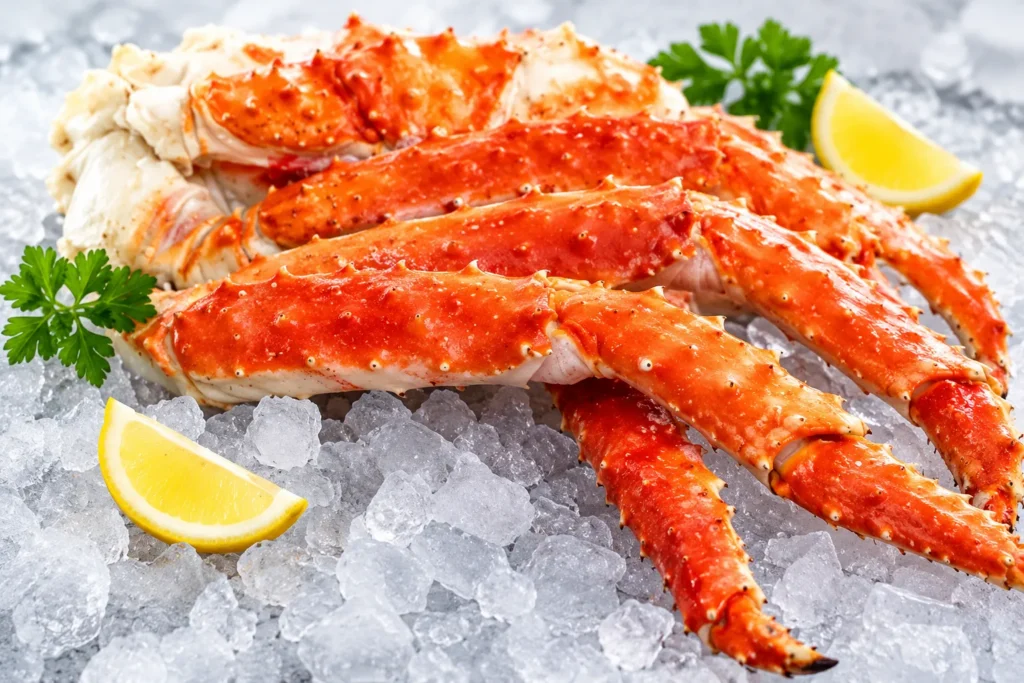
Alaskan king crab legs are at the top of most seafood wish lists, and their high price makes a wrong purchase costly. Online sellers that ship overnight, local seafood markets, and the seafood counter at a warehouse club or grocery store are the three practical channels for buyers. Each differs in price, size selection, and how the crab is handled between the dock and your door.
The Fresh Lobster Company has been shipping seafood out of Gloucester, America’s oldest seaport, since 2001. That sourcing experience shapes how we evaluate every king crab order we send out, and it is what this guide is built on. We will break down the channels, explain what the labels actually mean, and list what to confirm before any online order.
Key Takeaways
- Alaskan king crab legs are sold through three main channels: online sellers with overnight shipping, local seafood markets, and warehouse club or grocery seafood counters.
- Most king crab legs sold for home delivery are already cooked and flash-frozen. The job at home is gentle reheating, not cooking.
- Before ordering online, confirm the order cutoff time, delivery date selection, packaging, and the breakage or quality policy.
- Per FoodSafety.gov, fresh crab meat keeps 2 to 4 days refrigerated at 40°F or below and 2 to 4 months in the freezer.
Where Can You Buy Alaskan King Crab Legs?
Alaskan king crab legs are available from online seafood sellers, dedicated seafood markets, Asian supermarkets, warehouse clubs, and some restaurant supply stores. The right channel depends on what you value most: selection, price, or the chance to inspect the crab before paying.
Online sellers offer the widest range of sizes and ship nationwide. Markets let you see and sometimes handle the legs before purchase. Club and grocery counters keep things convenient, but stock and leg size change from week to week. Calling ahead saves a wasted trip in every case.
Buying Alaskan King Crab Legs Online
Online specialty sellers ship frozen king crab legs nationwide, usually by overnight air in insulated packaging. Most listings sell by the pound or by fixed-weight box, and many sellers operate from Alaska or the coast, drawing on frozen inventory so availability runs year-round.
Packaging does most of the work on a long trip. Expect a foam cooler with gel packs or dry ice, legs sealed in portions, and reheating instructions in the box. Quality-focused sellers freeze the crab close to where it was caught, which protects the texture of meat that is already cooked.
Before you pay, read the shipping policy rather than the product photos. Check the cutoff time for same-day dispatch, whether you can pick a delivery date, what happens if a leg cracks in transit, and what the seller asks you to do the moment the box lands.
Where to Find King Crab Legs in Person
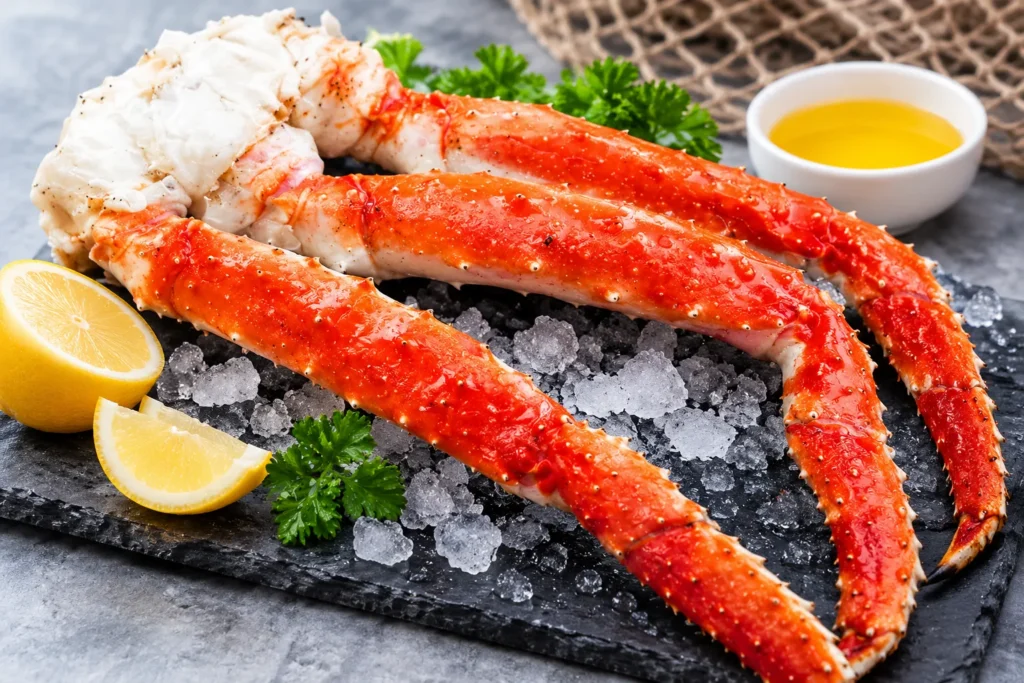
Dedicated seafood markets are the most reliable in-person source, with Asian supermarkets and warehouse clubs as lower-price alternates. Restaurant supply stores open to the public carry them in some areas as well.
Prices per pound swing widely by region and season, so ask for the current figure before committing. When you inspect legs in a case, look for ones that feel heavy for their size, smell clean, and show no drying at the cut ends. Ask whether the legs are sold frozen or thawed, because that answer changes what you should do with them the same day.
Red King Crab vs. Golden King Crab: Which Legs Should You Buy?
Red king crab is the classic choice and the largest of the commercially harvested crabs, according to NOAA Fisheries. Its meat is white with pink accents, and the flavor is rich and sweet with a tender texture. The main red king crab harvest comes from Bristol Bay in Alaskan waters.
The golden king crab comes from a different species caught in deeper water. The legs run smaller, the meat is slightly firmer, and the flavor stays sweet and delicate. Buyers who want more food for the table often choose golden legs for the price difference, while red remains the showpiece for a holiday meal.
Both types reach home kitchens the same way: pre-cooked and frozen. Pick by budget, portion size, and presentation rather than by any assumption that one arrives fresher than the other.
How to Compare King Crab Legs Before You Buy
Compare the grade label, net weight, leg count, and form before you compare price. These 4 details decide how much meat actually reaches the plate.
Size Grades and Per-Leg Weights
Sellers grade legs by size with names such as colossal, jumbo, and large, and the per-leg weight drives how many legs fit in a box. Grade names are not standardized between sellers, so the same label can describe different legs at different shops. The per-pound count and the stated per-leg weight tell you more than the adjective does.
| What to check | Why it matters | What to look for |
| Grade label | Signals size tier and price tier | The seller’s own definition of the grade |
| Net weight | The amount you actually receive | Total weight on the package, not drained estimates |
| Leg count / per-leg weight | Predicts servings per box | Count per pound or per-leg weight in the listing |
| Form | Changes prep work and presentation | Legs, clusters, split legs, or claw additions |
| Origin | Points to species and fishery | Species and harvest area named on the listing |
| Storage guidance | Protects quality on arrival day | Thawing and holding instructions from the seller |
Legs, Clusters, and Split Legs
A leg, a cluster, and a split leg are different cuts with different handling. A leg section is the single leg you picture at a crab bake. A cluster bundles leg sections with part of the shoulder, which adds meat but also shell weight. A split leg has been cut lengthwise so the shell opens without tools, which makes serving easier at the table.
Some boxes include claws alongside legs. Listings that state a claw ratio are being specific for a reason, and that ratio affects how the plate looks when you serve.
Fresh or Frozen? What the Label Actually Means
Nearly all king crab legs sold for home delivery are pre-cooked and flash-frozen close to where they were caught. Freezing at the peak of freshness preserves the sweet flavor, and the crab is cooked during that process, so reheating replaces cooking in your kitchen.
At a store counter, “fresh” king crab legs usually means thawed product rather than crab that skipped the freezer. Ask the counter staff directly. If you plan to cook within a day or two, thawed legs can work well; for anything longer, frozen legs that you thaw yourself give you more control.
King Crab Season and Availability
Red king crab is available year-round because sellers draw on frozen inventory, while the fishery itself is generally harvested from October to January, according to NOAA Fisheries. Commercial landings of all king crab in Alaska totaled 8 million pounds in 2024, valued at $96 million.
Supply can tighten without warning. NOAA notes that fishing for the Bristol Bay red king crab stock was closed for the 2021/2022 and 2022/2023 seasons because of low abundance of mature females. Closures like that push prices up and make early ordering worthwhile for holiday tables.
What to Check Before You Order King Crab Legs Online
6 details separate a smooth king crab delivery from a spoiled or damaged one. Work through them in order before you pay:
- Order cutoff time. Sellers dispatch on a schedule, so an order placed after the cutoff will be delayed by a full day.
- Delivery date selection. Many sellers let you choose the arrival date at checkout, which matters for holidays and weekends.
- Shipping method and transit time. Overnight air keeps frozen product frozen; slower methods risk partial thawing.
- Packaging. Look for insulated coolers with gel packs or dry ice, and legs sealed in portions.
- Breakage and quality policy. Legs can crack in transit. Know the remedy (reshipment, credit, or refund) before the box ships.
- Arrival instructions. Confirm whether someone should be home, how soon the legs need refrigeration or the freezer, and what the packaging should look like on arrival.
How Much King Crab Should You Buy Per Person?
Plan by meat yield, not box weight. Shells, claws, and shoulder sections account for much of the weight you pay for, so a box of legs feeds fewer plates than the same weight of picked meat would.
Sellers list per-leg or per-cluster weights on good listings, which lets you estimate portions without guessing. 2 questions settle most orders: how many people are eating, and how many other dishes share the table. When in doubt, ask the seller how many servings a specific box yields before you check out.
Storing, Thawing, and Reheating King Crab Legs
Keep king crab legs cold from the moment the box opens, thaw them under refrigeration, and reheat them gently so the already-cooked meat stays tender. FoodSafety.gov sets the cold-storage baseline: refrigerate at 40°F or below. Food kept continuously at 0°F or below stays safe indefinitely, so freezer limits are about quality, not safety.
- On arrival, refrigerate the crab legs if you plan to eat within a few days; otherwise, freeze them.
- Thaw under refrigeration rather than at room temperature. An overnight thaw suits most boxes.
- Reheat with gentle heat: steam over simmering water or warm in the oven until the meat is hot throughout. Prolonged high heat dries out cooked crab meat.
- Refrigerate leftovers promptly. FoodSafety.gov lists fresh crab meat at 2 to 4 days refrigerated and 2 to 4 months frozen.
King Crab Legs as a Gift
King crab legs ship well as a gift because sellers deliver directly to the recipient on a chosen date. Gift packaging, a handwritten message, and a gift certificate turn a box of crab into an occasion, which is why sellers promote them for holidays, birthdays, and anniversaries.
Because the product is perishable, confirm that someone will be home on the delivery day before you schedule it. A box on a porch in the sun undoes every cold-chain precaution the seller took.
Ordering King Crab Legs From The Fresh Lobster Company
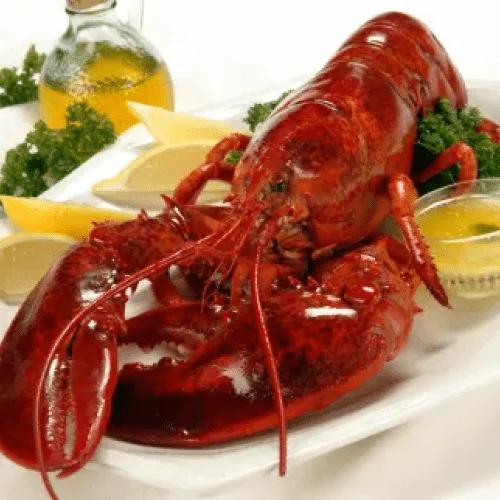
The Fresh Seafood Tower brings together 4 king crab legs, approximately 16 oysters (1 x 4 lb bag), 1 lb of U8-U12 shell-on uncooked shrimp, and 4 live lobsters (1.25 to 1.5 lbs each) in a single order, typically enough for 2 to 4 people. The tower ships with a silver lobster cracker, an oyster knife, 4 plastic lobster bibs, 4 seafood wet naps, butter, and cocktail sauce with horseradish.
Order King Crab Legs Shipped to Your Door
The Fresh Seafood Tower ships with everything you need for the table: crab, lobster, shrimp, oysters, and all the tools, with free shipping included and a greeting card option at checkout. Reserve your delivery date on our website, or call 1-508-451-2467. Shipped everywhere in the USA except Alaska and Hawaii via FedEx Express Overnight. Because seafood is perishable, call on the day your order arrives if anything looks wrong.
Frequently Asked Questions
Where can I get Alaskan king crab legs shipped?
Specialty online sellers ship frozen legs nationwide, usually overnight in insulated packaging with a delivery date you pick at checkout. The Fresh Lobster Company ships everywhere in the USA except Alaska and Hawaii via FedEx Express Overnight, Monday through Friday for Tuesday through Friday delivery. Saturday delivery is available for an additional $12 at checkout.
Are Alaskan king crab legs already cooked when they arrive?
Yes. Most king crab legs sold for home delivery are pre-cooked and flash-frozen, so reheating after thawing is all that is needed.
How long do Alaskan king crab legs last once delivered?
FoodSafety.gov lists fresh crab meat at 2 to 4 days refrigerated at 40°F or below and 2 to 4 months frozen. Reheat thawed legs and eat them within that refrigerator window.
Is buying king crab legs online better than buying them at a grocery store?
Online sellers usually offer more size grades, freezing close to the harvest, and delivery date control. Grocery counters can be convenient, but the stock is often thawed, and leg size and price per pound vary by store.